
Table of Contents
Elevating the Plate: Why Pure veg catering services Hyderabad is an Art Form
In a city world-renowned for its Biryani, the true test of a culinary master often lies in the vegetarian spread. Hyderabad’s elite events—from grand weddings in Gachibowli to traditional housewarmings in Jubilee Hills—are increasingly pivoting toward sophisticated, plant-based menus. Finding the right pure veg catering services in Hyderabad isn’t just about finding someone who can cook; it’s about finding a partner who understands the “science of the spice” and the “art of the service.”
As a catering consultant, I’ve seen hosts agonize over decor only to realize that the most talked-about element of any function is the food. Pure vegetarian catering requires a unique level of creativity. Without the “crutch” of meat-based gravies, a caterer must rely on the freshness of seasonal produce, the complexity of regional masalas, and the visual appeal of the presentation to wow a diverse crowd.
Whether you are hosting a traditional Panti Bhojanam or a modern fusion cocktail dinner, this guide provides the practical, industry-insider insights you need to ensure your event is remembered for all the right reasons.
What is Pure Veg Catering?
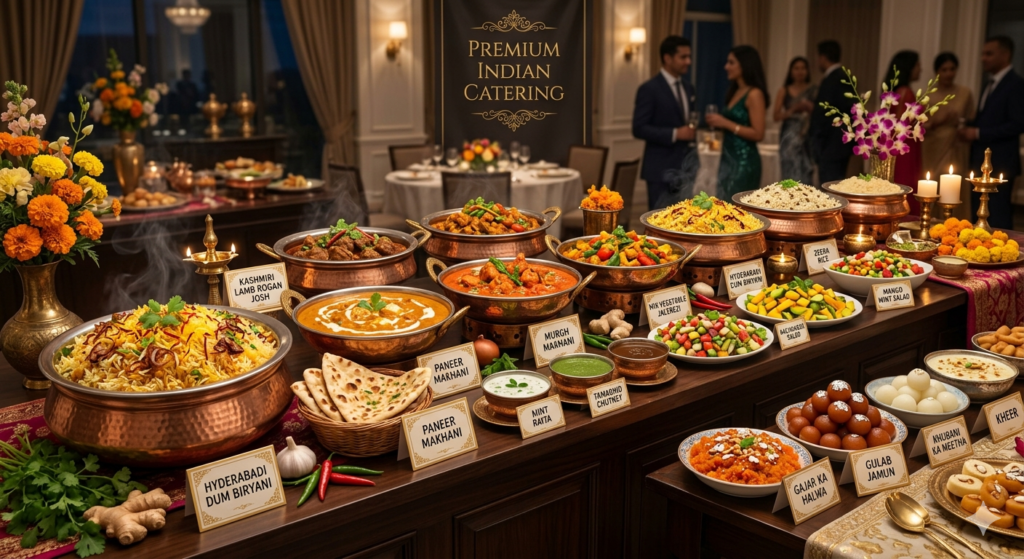
Pure veg catering is a specialized hospitality service that exclusively prepares and serves vegetarian food, adhering to strict “no-meat” policies within the kitchen and service areas. In Hyderabad, premium pure veg caterers often offer specialized sub-categories, such as Sattvic (no onion/garlic), Jain-compliant, and Brahmin-style catering, ensuring that religious and dietary sentiments are respected without compromising on 5-star taste and presentation.
Why Pure Veg Excellence Matters for Event Success
In the hospitality world, a vegetarian menu is often more challenging to execute than a non-veg one. Here is why your choice of caterer is pivotal:
1. Cultural and Religious Integrity
For many Hyderabadi families, a wedding is a sacred rite. Using a “Pure Veg” caterer provides peace of mind that the kitchen is free from non-vegetarian contamination. This psychological comfort allows your elders and traditional guests to dine with absolute trust.
2. The Rise of “Healthy Luxury”
In 2026, we are seeing a massive shift toward plant-forward dining. High-end vegetarian catering now includes superfoods, organic produce, and farm-to-table concepts. It’s no longer just “Gobi Manchurian”—it’s “Truffle-infused Mushroom Galouti.”
3. Visual and Flavor Diversity
Vegetables offer a color palette that meats cannot. The best caterers use this to their advantage, creating vibrant “grazing tables” and live counters that act as decor in themselves.
How Catering Planning Works: The Professional Roadmap
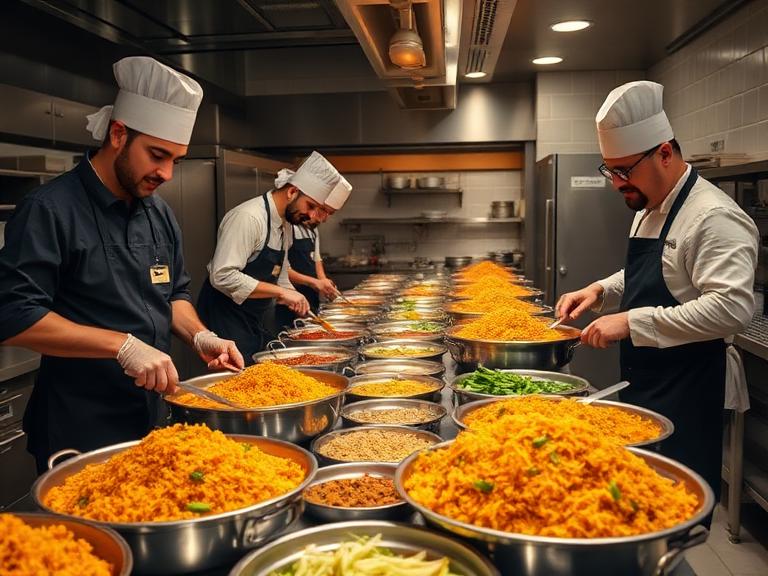
Planning a menu for 500+ people is an exercise in logistics. Here is the workflow we follow at Vaibhavam Caterers:
The Menu Engineering Session
We don’t just list dishes; we “engineer” a menu. We look at the Texture Map. If you have a creamy Paneer Butter Masala, you need a crunchy Cabbage Pakora or a crisp Vadiyam to balance the palate. We also balance the “Spice Curve”—alternating between mild, cooling dishes and zesty, bold flavors.
Site Inspection
In Hyderabad, many venues have “Pure Veg Only” zones. We check for drainage, ventilation for live counters, and the “power load” required for induction heaters. If your caterer doesn’t ask to see your venue’s kitchen area beforehand, that’s a red flag.
Menu Design Factors: Balancing Tradition with Global Trends
A successful Hyderabad veg menu should be a journey across regions.
1. The Regional Anchor
For a South Indian wedding, the anchor is often a perfectly tempered Pappu Charu or Ulavacharu. For a North Indian style reception, it might be a Dal Makhani slow-cooked for 12 hours.
2. The “Live Counter” Strategy
Live counters are the heartbeat of modern events.
- The Appam & Stew Station: A massive hit for morning weddings.
- The Fusion Chaat Counter: Think Nitrogen Papdi Chaat or Palak Patta Chaat.
- The Tawa Veg Counter: Seasonal veggies tossed in spices right before the guest.
3. Practical Menu Example (The 2026 Premium Spread)
- Starters: Watermelon Feta Skewers, Pesto Paneer Tikka, Crispy Lotus Stem.
- Main Course: Gutti Vankaya (Brinjal), Zaffrani Paneer, Malabar Parotta, Bagara Annam.
- Dessert: Live Jalebi with Rabri, Apricot Delight (Qubani-ka-Meetha), and a seasonal Fruit Boutique.
Guest Experience: The Small Details That Build Trust
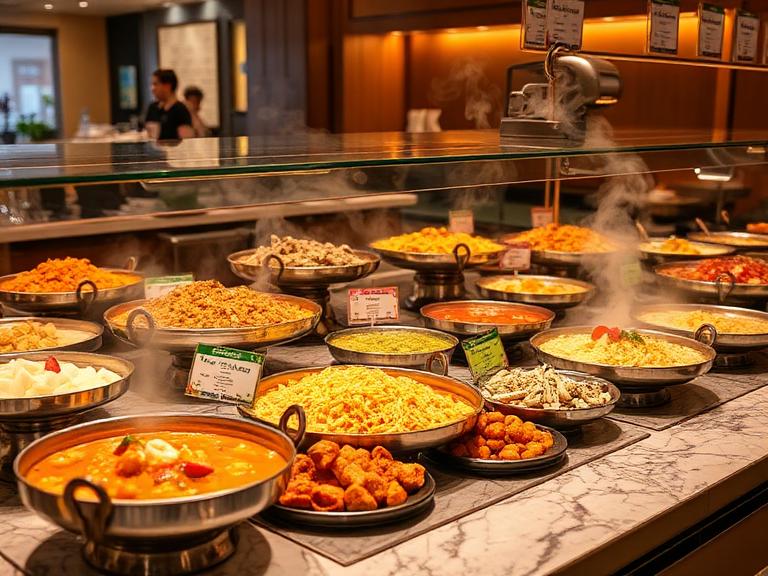
The Temperature Rule In a buffet, the most common complaint is cold food. Professional caterers use high-grade chafing dishes and induction plates to ensure food stays between 60°C and 70°C.
The Cleanliness Quotient At a pure veg event, guests are highly sensitive to hygiene. Seeing a server use a dedicated ladle for each dish and maintaining a spotless “clearance” area is what builds your reputation as a host.
Labeling Clearly marking dishes as “Jain,” “Vegan,” or “Contains Nuts” is essential in 2026. It shows a level of sophistication and care that guests appreciate.
Common Misconceptions About Veg Catering
- “Veg food lacks protein”: With the clever use of lentils, sprouts, paneer, and soy, a veg menu can be as nutritionally dense as any other.
- “It’s always cheaper”: Actually, sourcing high-quality saffron, premium nuts, and off-season exotic vegetables can make a veg menu more expensive than a standard chicken-based one.
- “You can’t have a grand ‘Showstopper’ dish”: A whole-roasted “Stuffed Tandoori Gobi” or a massive “Veg Dum Biryani” unsealed at the table provides all the drama of a meat-based counterpart.
Practical Planning Tips for Hosts
- The Tasting Session: Never skip it. But remember, food for 10 people tastes different than food for 500. Ask the caterer how they maintain consistency at scale.
- The Water Strategy: In Hyderabad’s heat, have a dedicated “Infused Water” station (Cucumber-Mint or Lemon-Ginger) separate from the food line.
- Manage the Queue: For every 75 guests, you should have one buffet “line.” If you have 300 guests, you need 4 lines to ensure no one waits more than 5 minutes.
Frequently Asked Questions (FAQs)
1. What is the average cost of pure veg catering in Hyderabad? For small parties, it starts at ₹450–₹600 per plate. For premium weddings with 20+ items and live counters, it ranges from ₹800 to ₹1,500+ per plate.
2. Can you provide a strictly Jain menu (no onion/garlic/root vegetables)? Yes, specialized pure veg caterers have separate SOPs for Jain food to ensure no root vegetables are used while maintaining high flavor profiles.
3. Do you handle the table decor and seating? While most caterers focus on the food and buffet setup, “Full-Service” caterers like Vaibhavam can coordinate with decorators for a seamless look.
4. How much lead time is needed to book a caterer in Hyderabad? For “Muhurtam” (auspicious) dates, we recommend booking 4–6 months in advance. For corporate events, 2–4 weeks is usually enough.
5. Do you provide staff for the event? Yes, our packages include trained supervisors, buffet servers, and clearance staff.
6. How do you ensure food safety? We follow strict HACCP guidelines, ensuring raw produce is washed in chlorine-free solutions and food is cooked to safe internal temperatures.
7. Can we customize the menu after the tasting? Absolutely. The tasting session is specifically designed to tweak salt, spice, and oil levels to your preference.
8. What happens to the leftover food? We can pack unserved food for the host. Alternatively, we partner with local NGOs in Hyderabad to distribute surplus food to those in need, with the host’s permission.
Conclusion: Serving Excellence, One Plate at a Time
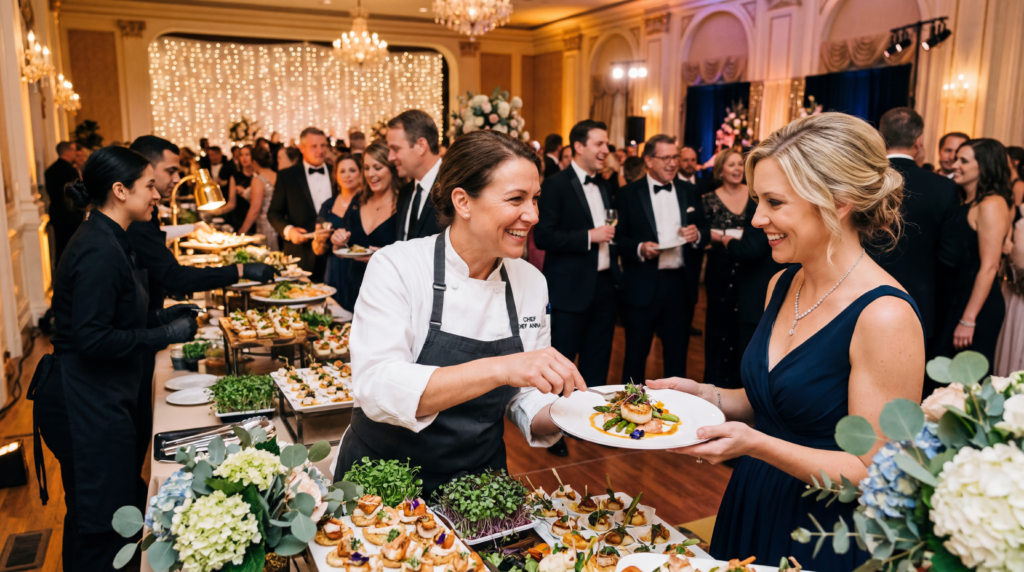
Choosing the right pure veg catering service in Hyderabad is a decision that impacts your guests long after the event ends. In this city, food is an emotion. When you serve a meal that is prepared with purity, presented with pride, and tasted with joy, you aren’t just a host—you are a curator of memories.
Focus on the “Three Qs”: Quality of ingredients, Quickness of service, and Quaintness of presentation. When these align, your feast will be the talk of the town.


Leave a Comment