
Table of Contents
Mastering the Spread: The Definitive Non Veg Catering Menu with Price
In the world of event planning, the “Non-Veg Menu” is more than just a list of dishes; it is the cornerstone of your event’s hospitality. Whether you are hosting a grand wedding in a metropolitan convention center or an intimate home gathering, the quality of your protein—and the transparency of your pricing—will define your success.
As a catering consultant who has designed thousands of spreads, I know that when people search for a non-veg catering menu with price, they aren’t just looking for the cheapest quote. They are looking for a balance of flavor, safety, and reliability. In 2026, costs have shifted due to supply chain changes, but the core demand for authentic, steaming-hot, and flavorful meat dishes remains the gold standard.
Average Non-Veg Catering Prices in 2026
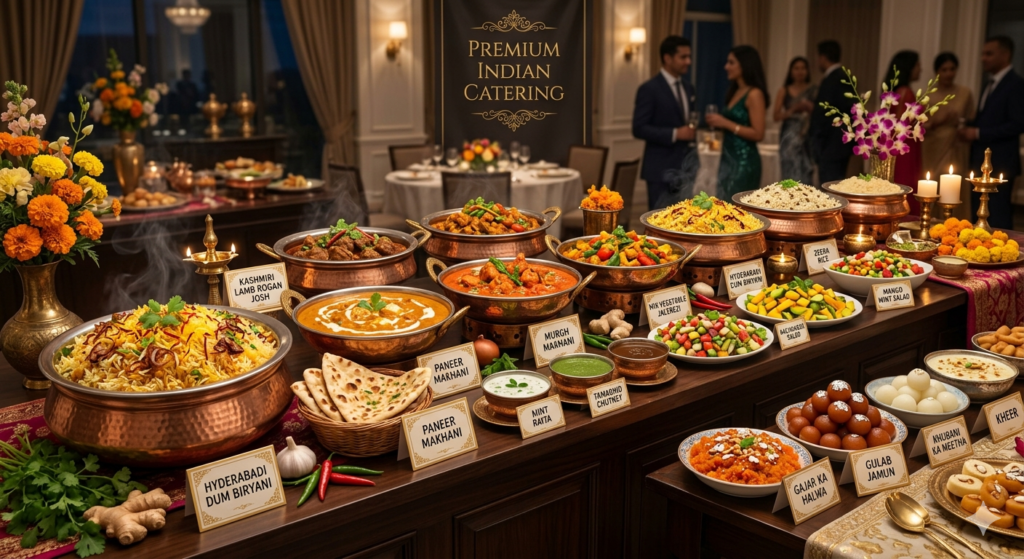
A standard non-veg catering menu with price typically ranges from ₹450 to ₹1,500 per plate.
- Basic Packages (Chicken-focused): ₹450 – ₹650
- Executive Packages (Chicken + Mutton Biryani): ₹700 – ₹950
- Premium/Wedding Packages (Seafood + Mutton Specialities): ₹1,000 – ₹1,800 Pricing is heavily influenced by the “Meat Ratio” (the weight of meat provided per guest), the grade of Basmati rice used, and the number of live interactive counters.
What is a Professional Non-Veg Catering Package?
Professional catering isn’t just about cooking; it is about logistics. A “Non-Veg Package” traditionally includes the preparation of appetizers, main courses, and desserts, alongside professional service staff, buffet equipment, and crockery.
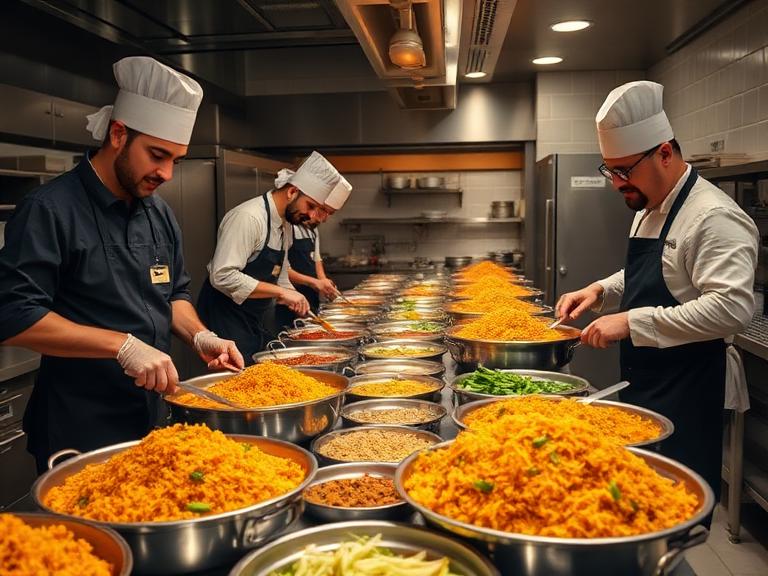
The complexity lies in the “Batch-Cooking” technique. Unlike a restaurant where you cook for one, a caterer must ensure that a Mutton Dum Biryani prepared for 500 people retains its moisture, aroma, and spice balance from the first serving to the last.
Why the Right Menu Matters for Event Success
The menu is the social currency of your event. In many cultures, the generosity of the host is measured by the quality of the meat served.
- Guest Retention: A well-timed appetizer service keeps guests engaged.
- Social Prestige: Signature dishes like Mutton Marag or Galouti Kebabs create “Instagrammable” moments.
- Safety: High-protein food spoils quickly. Professional catering ensures temperature-controlled service, reducing the risk of foodborne illness.
How Catering Planning Works: Behind the Scenes
When I sit down with a client to plan a non-veg catering menu with price, we work through a tactical roadmap:
1. The Headcount and “The Buffer”
We calculate the “Guaranteed Minimum” count. In large events, we always prepare a 10% buffer. If you book for 200, a professional caterer should be able to serve 220 without a dip in quality.
2. The Kitchen Audit
Non-veg catering requires high-intensity heat. We determine if the food will be cooked entirely at a central base kitchen (best for Biryani) or if “Live Starters” will be fried on-site (best for Fish and Chicken appetizers).
3. Load-in Logistics
We map out the “Clearance Path.” Nothing ruins a premium non-veg experience like used plates piling up near the dessert counter.
Menu Design Factors: Crafting the Perfect Balance
Designing a menu is like composing a symphony. You need a mix of textures and spice levels.
The “Hero” Dish
In most Indian non-veg menus, the Biryani is the hero. If the Biryani is exceptional, guests will forgive a mediocre starter. If the Biryani fails, the event fails.
Practical Menu Example: The “Royal Wedding” Spread
- Welcome: Saffron-infused Badam Milk / Fresh Fruit Mocktail.
- Appetizers: Mutton Marag (Soup), Apollo Fish (Live), Tandoori Chicken Tikka.
- The Main Event: Mutton Dum Biryani (1.25:1 Meat-to-Rice Ratio).
- Accompaniments: Mirchi-ka-Salan, Double-Whisked Raita, Bagara Baingan.
- Desserts: Apricot Delight (Qubani-ka-Meetha) with Vanilla Gelato.
Estimated 2026 Price: ₹1,100 – ₹1,350 per plate.
Guest Experience Factors: Beyond the Food
The “Plate Experience” is influenced by things you can’t taste:
- Staff Grooming: Uniformed, gloved, and well-spoken staff elevate the perception of the food.
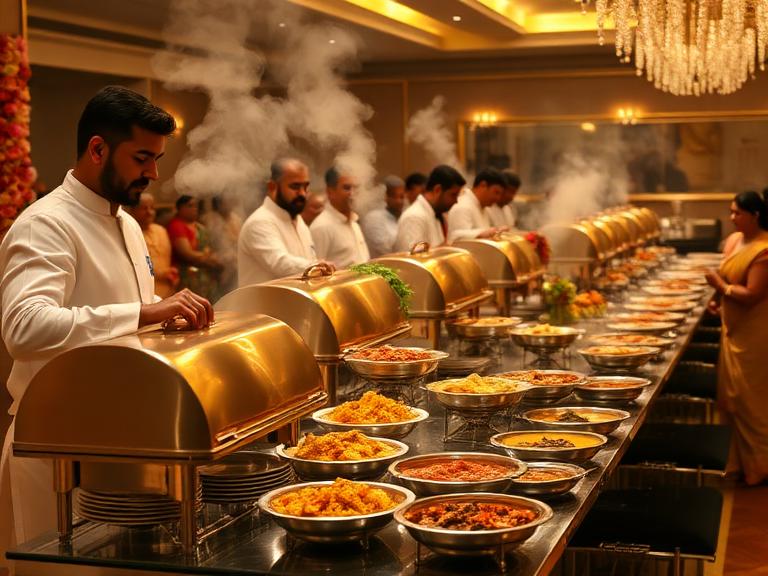
- Temperature Management: Using induction-based heating rather than messy wax candles keeps gravies at a consistent 65°C.
- Clearance Speed: Professional “Clearance Armies” ensure that every guest has a fresh, clean table within 60 seconds of finishing their meal.
Common Misconceptions About Non-Veg Catering Costs
- “More Items = Better Value”: This is a budget killer. 20 mediocre items are worse than 10 exceptional ones. Focus on a “tight” menu with high-quality ingredients.
- “Frozen is Cheaper”: While frozen meat is sometimes cheaper, the loss of moisture during cooking means you need to buy more. Fresh “Potla” (young goat) mutton is more expensive but yields better results.
- “Vegetarian Guests Don’t Cost Much”: While the protein cost is lower, the logistics (staff, transport, crockery) remain identical. Expect veg plates to be only 20-30% cheaper than non-veg.
Practical Planning Tips for Hosts
- Ask for the Meat Ratio: A premium caterer will tell you exactly how many grams of meat are allocated per plate (usually 200g – 250g for Biryani).
- The “Live” Element: Always include at least one live counter. The sound and smell of fresh cooking stimulate the appetite and build trust in freshness.
- Audit the Oil: Ask what brand of oil is used. High-grade refined oils prevent that “heavy” or “greasy” feeling after a non-veg meal.
FAQs (Frequently Asked Questions)
1. What is the standard per plate price for non-veg catering in 2026? Standard prices range from ₹450 for chicken-based menus to ₹1,500 for premium mutton and seafood packages.
2. Does the price include mineral water and soft drinks? Usually, water and sodas are billed on “Actual Consumption” (MRP) or added as a flat add-on of ₹40–₹60 per plate.
3. Why is Mutton Biryani more expensive than Chicken Biryani? Mutton is a premium protein with higher market rates and more significant “cleaning loss” (bone-to-meat ratio) compared to chicken.
4. Do caterers bring their own crockery? Yes, most packages include high-quality Melamine or Bone China crockery and stainless steel cutlery.
5. Can we request a “No-MSG” or “Organic” menu? Yes, modern caterers like Vaibhavam Caterers specialize in clean-label cooking, though this may add 15-20% to the cost.
6. What is the minimum guest count for these prices? Most “best prices” are based on a minimum of 100 guests. For smaller parties (20-50), expect a logistics surcharge.
7. Is the service staff included in the per-plate price? In professional quotes, staff, transport, and setup are almost always included.
8. How do I handle leftovers? Reputable caterers will pack the unserved food for you. Ensure you provide containers or pay for their food-grade packing material.
9. Is GST extra? In India, a 5% GST on catering services is standard and usually added to the final bill.
10. Do you provide tasting sessions? Yes, we recommend a tasting for 4-5 people once a preliminary quote is approved to fine-tune the spice levels.
Helpful Conclusion: Making an Informed Choice
Choosing a non-veg catering menu with price isn’t just a financial transaction; it’s a partnership. Your caterer is responsible for the health and happiness of your guests. Look for transparency, visit their base kitchen, and never compromise on the quality of the primary protein.
At Vaibhavam Caterers, we believe that the best food is served with the highest integrity. We invite you to explore our 2026 menu tiers and see how we can make your next event a culinary landmark.
Ready to build your menu? [Contact our Menu Planning Experts for a Personalized 2026 Quote.]


Leave a Comment