

Table of Contents
How Much Does a Buffet Cost for 100 People?
If you are planning an intimate wedding, a milestone birthday, or a corporate seminar, the number “100” is a classic milestone. It’s large enough to feel like a real party, but small enough to maintain a sense of quality. As a catering consultant, the first question I am always asked is: “What is the bottom line for 100 guests?”
In 2026, the average cost for a buffet for 100 people ranges from $2,500 to $7,500 (approx. ₹45,000 to ₹1,25,000 in India). On a per-plate basis, you are looking at anywhere from $25 to $75 (₹450 to ₹1,250).
Why such a wide gap? Because “buffet” is a broad term. A casual backyard BBQ buffet is a different financial beast compared to a premium wedding spread featuring Mutton Marag, live pasta stations, and artisanal desserts. In this guide, I’ll pull back the curtain on how we calculate these costs and how you can get the best value for your 100-guest event.
Quick Budget Estimates
For a 100-person event, expect these price tiers:
- Budget Buffet: $2,500 – $3,500 (Basic mains, 1-2 sides, standard service).
- Standard Buffet: $4,000 – $5,500 (Multiple proteins, appetizers, salad bar).
- Premium Buffet: $6,000 – $8,500+ (Live counters, high-end seafood/meats, designer setups).
What is Buffet Catering and Why Does It Scale?
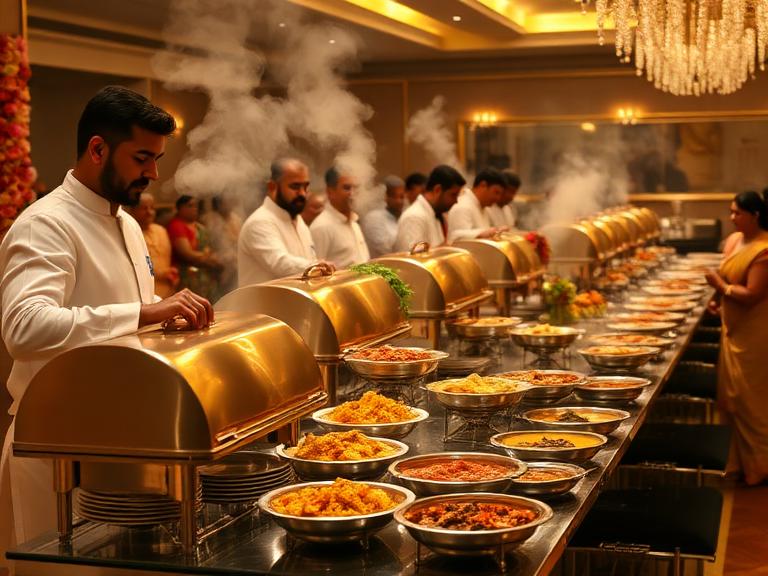
Buffet catering is a “self-service” style where food is presented in large chafing dishes on a long table. Guests move along the line, selecting what they like.
For 100 people, the buffet is the “Goldilocks” of service styles. It is more cost-effective than a plated “sit-down” dinner (which requires a massive waitstaff) but feels more formal than passed hors d’oeuvres.
The scaling factor is simple: for 100 guests, a caterer can prepare food in “bulk batches,” which lowers the labor cost in the kitchen. However, you must account for “over-portioning.” Unlike a plated meal where everyone gets one 6oz chicken breast, in a buffet, guests might take a little of everything, meaning the caterer must prepare roughly 20% more food than the actual head count.
Why the Buffet Matters for Event Success
The food is often the most talked-about element of any event. For a 100-person gathering, the buffet serves as a social hub. It dictates the flow of the evening.
A well-planned buffet ensures that guest #1 and guest #100 have the same experience. This means the temperature must be consistent, the trays must never look “empty,” and the variety must cater to diverse dietary needs. If the buffet fails, the event feels disorganized. If it succeeds, it builds a sense of abundance and hospitality that guests will remember for years.
How Catering Planning Works: The Professional Process
When you book a caterer for 100 people, you aren’t just paying for ingredients. You are paying for a multi-step logistical operation:
- Menu Selection: Aligning the food with the event theme and guest demographics.
- Site Inspection: Ensuring the venue has the power and space for heating elements.
- Procurement: Sourcing fresh, high-quality proteins and produce 24–48 hours before the event.
- Prep & Production: Transforming raw ingredients into finished dishes in a licensed commercial kitchen.
- Transportation: Moving food in insulated “hot boxes” to maintain safety standards.
- Setup & Service: Arranging the “theatre” of the buffet and managing refills.
Menu Design Factors: What Drives the Price?
As a planner, I categorize menu costs into three main drivers:
1. The Protein Choice
Chicken and vegetarian options are your budget’s best friends. If you move into Mutton, Salmon, or Beef Tenderloin, your per-plate cost can jump by 30%. For 100 people, I often suggest a “Hybrid Menu”—one premium meat and one high-quality vegetarian main—to balance the budget.
2. Live “Theatre” Stations
In 2026, live counters (Dosa stations, Pasta bars, or Carving stations) are highly popular. While they add “wow” factor, they also require an extra chef. Expect to pay a “Chef Fee” of $150–$300 per station plus the ingredient cost.
3. Number of Sides and Salads
It’s a common misconception that more sides make the buffet cheaper. In reality, every extra dish requires its own prep time, serving vessel, and space. For 100 people, 2 mains, 3 sides, and 2 salads is the “Golden Ratio” for variety without waste.
Guest Experience Factors: Beyond the Food
When budgeting for 100 people, don’t forget the “Software”—the service elements that make the food taste better.
- Service Ratios: For a 100-person buffet, you need at least 4–5 staff members. This includes people to refill trays, clear plates from tables, and pour water.
- Crockery & Cutlery: Will you use high-end disposables (cheaper) or rented bone china and silver? Rentals can add $5–$15 per person.
- The “Flow” Factor: For 100 people, I always recommend a double-sided buffet line. This allows 100 guests to be served in under 20 minutes, preventing the “long line” fatigue.
Common Misconceptions About Buffet Costs
“Buffets are always cheaper than plated meals.”
Not always. Because guests have “unlimited” access, food quantities must be much higher. A plated meal has a controlled portion; a buffet is an open variable.
“If I provide the alcohol, the caterer should be cheaper.”
While you save on the markup of the booze, your caterer still has to provide the glassware, the ice, the garnishes, and the licensed bartenders. These “service fees” are often overlooked in the initial budget.
“Vegetarian menus are significantly cheaper.”
Quality vegetarian food (think grilled Halloumi, Paneer Lababdar, or Truffle Risotto) often costs as much as chicken due to the specialized ingredients and labor-intensive prep involved.
Practical Planning Tips for a 100-Person Event
- The 10% Rule: Always tell your caterer the “Guaranteed” count is 90 if you expect 100. Most caterers prepare a 10% buffer anyway. This prevents you from paying for “no-shows.”
- Focus on the “Hero” Dish: Spend more on one spectacular main course and keep the sides simple and seasonal.
- Inquire About “Actuals”: Ask if the quote includes water, ice, and trash removal. Some caterers hide these as “Administrative Fees” at the end.
- Timing is Money: A lunch buffet is almost always 20% cheaper than a dinner buffet, even with the same menu.
Practical Menu Example: The “Urban Classic” (Budget: $45/plate)
- Appetizers: Mini Vegetable Spring Rolls, Chicken Satay with Peanut Sauce.
- Salad: Seasonal Green Garden Salad with Balsamic Vinaigrette.
- Mains: Herb-Roasted Lemon Chicken, Grilled Basa with Caper Butter.
- Sides: Garlic Mashed Potatoes, Sautéed Seasonal Vegetables, Artisan Bread Rolls.
- Dessert: Mini Fruit Tarts and Dark Chocolate Brownie Bites.
- Beverages: Infused Water and Iced Tea.
Frequently Asked Questions (FAQ)
1. How many servers do I need for a 100-person buffet?
For a standard buffet, 4 to 5 servers are ideal. This ensures the buffet stays clean, plates are cleared promptly, and water is refilled.
2. How much food do I need for 100 guests?
Professionally, we plan for about 1.5 lbs of food per person. This includes roughly 6oz of protein, 4oz of starch, and 4oz of vegetables/salads.
3. Is it okay to have only one buffet line for 100 people?
It is possible, but it takes longer. A single line moves at about 3-4 people per minute. A double-sided line moves twice as fast, which is much better for guest satisfaction.
4. Does the price usually include the cake cutting?
Most caterers include basic cake cutting as part of the dessert service, but some may charge a “cake cutting fee” of $1–$3 per person if they have to provide plates and forks specifically for it.
5. What is a “Service Charge” vs. a “Gratuity”?
A service charge (often 18–22%) covers the caterer’s overhead (insurance, transport, admin). A gratuity is a tip specifically for the waitstaff. Always check your contract to see which is included.
6. Can a buffet cater to allergies?
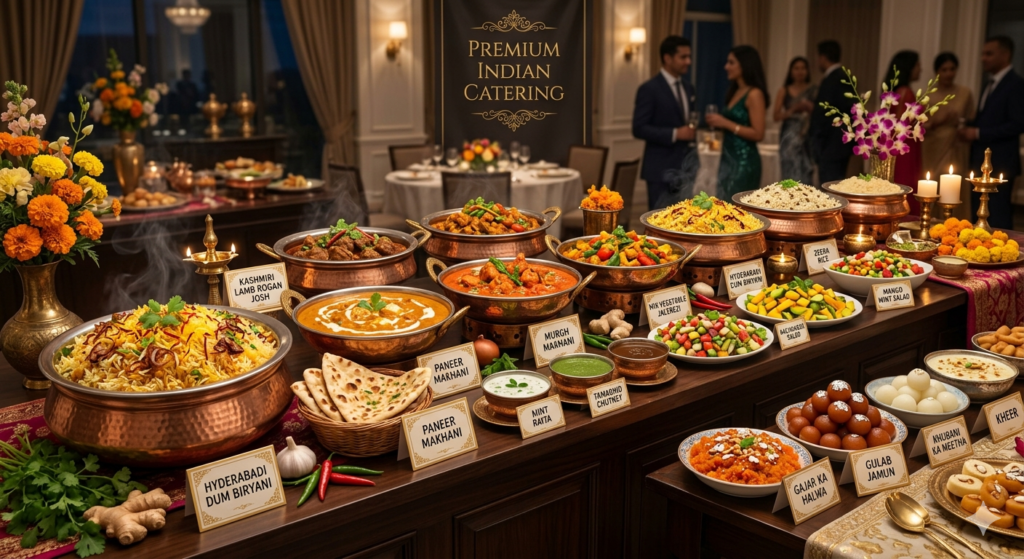
Yes. The best way to handle this for 100 people is clear signage. Labels should indicate “Gluten-Free,” “Vegan,” or “Contains Nuts” so guests can self-navigate.
7. How long should the buffet stay open?
Standard practice is 90 minutes. After two hours, food safety (temperature) becomes a concern, and the food starts to lose its visual appeal.
8. What happens to the leftovers?
Due to health department regulations, most caterers cannot allow you to take leftovers home if they have been sitting on a heated buffet line. However, unserved “back-of-house” food can often be packed for you.
Decision Summary: Planning with Confidence
Planning a buffet for 100 people is a balancing act between your vision and your budget. By understanding that your costs are driven by protein choices, service levels, and rental needs, you can make informed decisions.
In 2026, the best events aren’t the ones with the most expensive food, but the ones where the food is served hot, the variety is thoughtful, and the hospitality is seamless.
Would you like a customized menu quote for your 100-guest event? Contact Vaibhavam Caterers today for a transparent, professional consultation.

Leave a Comment